
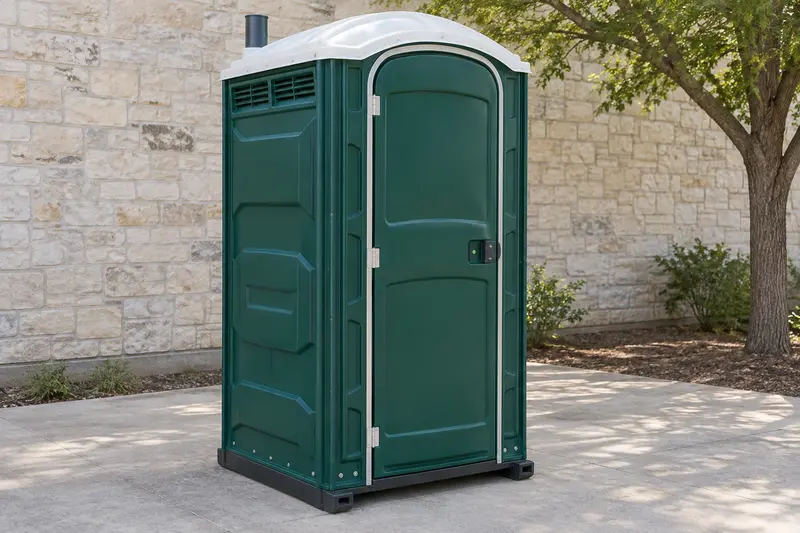
What does a standard cabin provide?
The usual starting point is a self-contained, non-flushing portable toilet. The available model determines its fittings; a sink, light or flushing system should never be assumed from a category label. Ask the team to identify the proposed unit before you compare it with an upgrade.
Explain who will use it and when: a few trades working through the day, visitors arriving together, or people at a property whose indoor facilities are unavailable. Those patterns help the provider review quantity and servicing, rather than quoting only against a calendar date.
Keep the wash station in the same conversation
A basic toilet and handwashing are separate pieces of the setup unless the offered model explicitly includes both. Ask about a convenient wash point, supplies and replenishment. Positioning a sink near the exit is useful only if it does not obstruct the doorway or the route people need.
Describe the spot in practical terms
Send the property address and identify the entrance used by deliveries. Note a narrow side gate, a changing construction surface or any restriction on vehicle entry. The provider needs to assess placement and subsequent service access; being able to walk a route does not establish that equipment can be delivered there.
Read the equipment line on your quote
Check that the proposed cabin, rental dates, service visits and collection arrangement match the request. Clarify any separate handwashing or upgraded features before confirming. If conditions change during the rental, contact the team rather than moving a filled unit or assuming an extension happens automatically.