
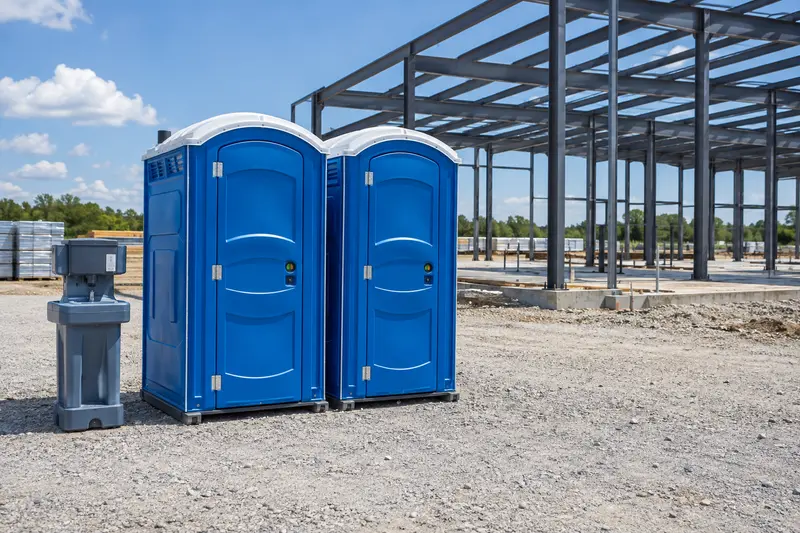
Mark the location on the working site plan
Identify the delivery entrance and proposed restroom position before the driver arrives. A gate at the postal address may not be the gate used by site vehicles. Explain whether unloading, parking or overhead activity could affect the approach; the equipment provider must review the actual access.
Choose a position away from traffic conflicts, material storage and areas scheduled for excavation or paving. Keep the walking route practical for the crew. If no single position works through the project, raise the possible relocation before placing the order.
Count the people present together
Include subcontractors and shift overlap when describing the crew. Tell the team whether permanent restrooms are accessible, restricted or being removed from service. Quantity and maintenance need to suit actual demand, not only the number listed on the main contractor’s payroll. The employer remains responsible for checking workplace requirements.
Make access work on service days too
Name a site contact who can open the gate and keep parked vehicles out of the service route. Ask how cleaning, waste servicing and supplies are arranged. Include a handwashing station where needed, with its own replenishment plan rather than assuming toilet servicing covers every item.
Put changes through one person
Agree who can request extra units, a position change or collection. Conflicting instructions from different trades can lead to avoidable problems. For phased projects, keep the rental arrangement with the site handover notes so the next supervisor knows what is expected.